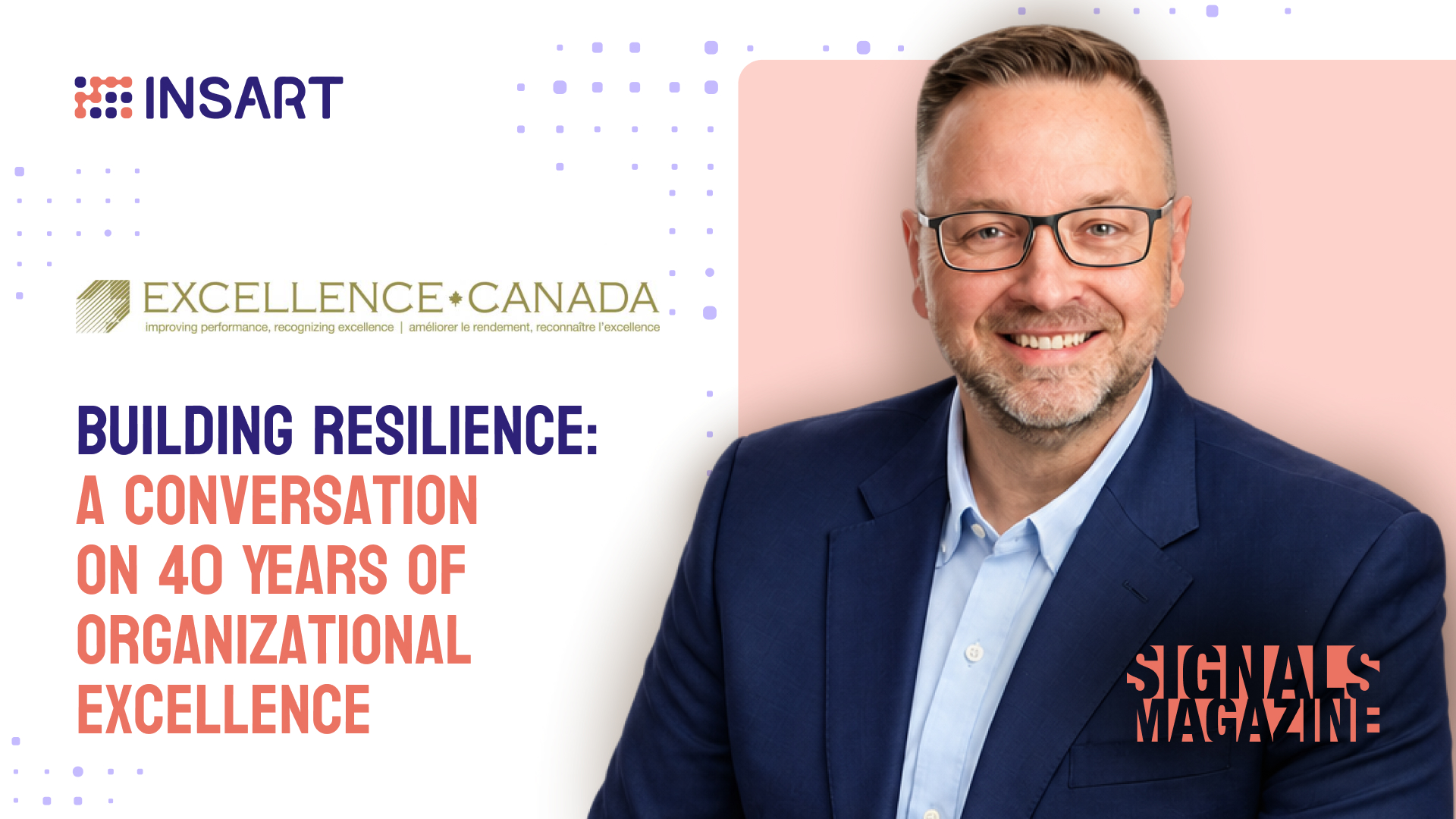
For more than four decades, Excellence Canada has helped organizations across the country sharpen their competitive edge and build the resilience that outlasts economic cycles. Since 1984, the organization’s frameworks have evolved alongside the business landscape, guiding leaders through booms, recessions, and everything in between.
In this featured conversation, we sit down to discuss what separates thriving organizations from those that stall, the thinking behind the newly launched EPIC (Excellence in Productivity, Innovation, and Competitiveness) Framework, and the one principle that has stood the test of a 40-year journey.
The Discipline Behind Lasting Success
So what separates companies that keep growing from the ones that stall out? It comes down to intentionality. “Organizations that are planful and intentional about their focus on quality and improvement have been able to weather the challenges,” says Sean Slater, President & CEO of Excellence Canada. And it’s not enough to just have a plan — you have to stick with it. “Leaders who are committed to their excellence plan, and who don’t deviate when things get difficult, continue to evolve and grow while experiencing less impact in a downturn.”
That same discipline shows up in how innovation gets funded and prioritized, too. A solid operational excellence framework “ensures that organizations are making innovation decisions at the right time for the right reason”, which goes a long way toward killing off the classic “pet project” problem, where resources get poured into ideas with no real strategic backing. Real excellence means rigor from beginning to end, including proper documentation, signoffs, data gathering and measurement, and the inclusion of learnings in subsequent stages of the launch, whether you’re talking about an internal initiative or something customer-facing.
Why EPIC, Why Now
That naturally leads to EPIC — the framework built to bring this kind of structured decision-making to smaller organizations that couldn’t always afford it before. The idea was “to make the rigour and structure that was out of reach for many small and medium-sized organizations because of cost or resource constraints accessible to those small and medium-sized owners and founders,” Sean shares.
The timing wasn’t an accident, either. Canada’s productivity struggles were already a known issue, and then a volatile geopolitical moment hit on top of it — “the inauguration of a new administration south of the border and the arrival of a new and inconsistent tariff regime” — leaving a lot of businesses without a clear playbook. EPIC was designed to fill that gap, giving SMEs and founders a way to make intentional decisions “at a cost point that’s built for SMEs,” Sean says.

A Global View, One Universal Truth
Having worked with organizations across Canada, the U.S., and Europe in his career, one pattern shows up again and again no matter where you go: leaders are all chasing more or less the same things — competitive advantage, market gaps, revenue growth, new markets, cost management. What differs, in Sean’s opinion, is how they get there. “They are either sticking to strategy, doing it within the framework their organization has established, or they’re making opportunistic decisions that feel right for where the business is at today,” Sean explains.
Neither approach comes with guarantees, but there’s a clear lean based on experience: “When I speak to leaders who have built a culture around the rigour of excellence, their level of confidence in the success of their teams to build and launch is elevated,” Sean shares.
Navigating Uncertainty
For founders staring down an unclear path, the advice is to trust the process over gut instinct alone, and there’s a great image for it. “When a pilot is flying through a cloud, the pilot that trusts the instruments and trusts the plan, flies through the cloud and comes successfully out the other side, safely moving forward. The pilot that trusts instinct over the instruments may just come out of those clouds with the plane upside down,” Sean says.
Trust as a Not-for-Profit
Being a not-for-profit has really shaped how Excellence Canada builds relationships with the organizations it works with. With no competitive stake in a client’s business, there’s room for a different kind of openness. “We are clear about what we do, where we belong, and how we operate, and I think this gives our clients and partners a sense of comfort and confidence as they share confidential information with us and give us direct access to their employees and stakeholders,” Sean notes. Over time, that trust compounds, reinforced by clients who credit their own success to the principles they’ve built alongside Excellence Canada.
Looking Ahead: Resilience as a Skill
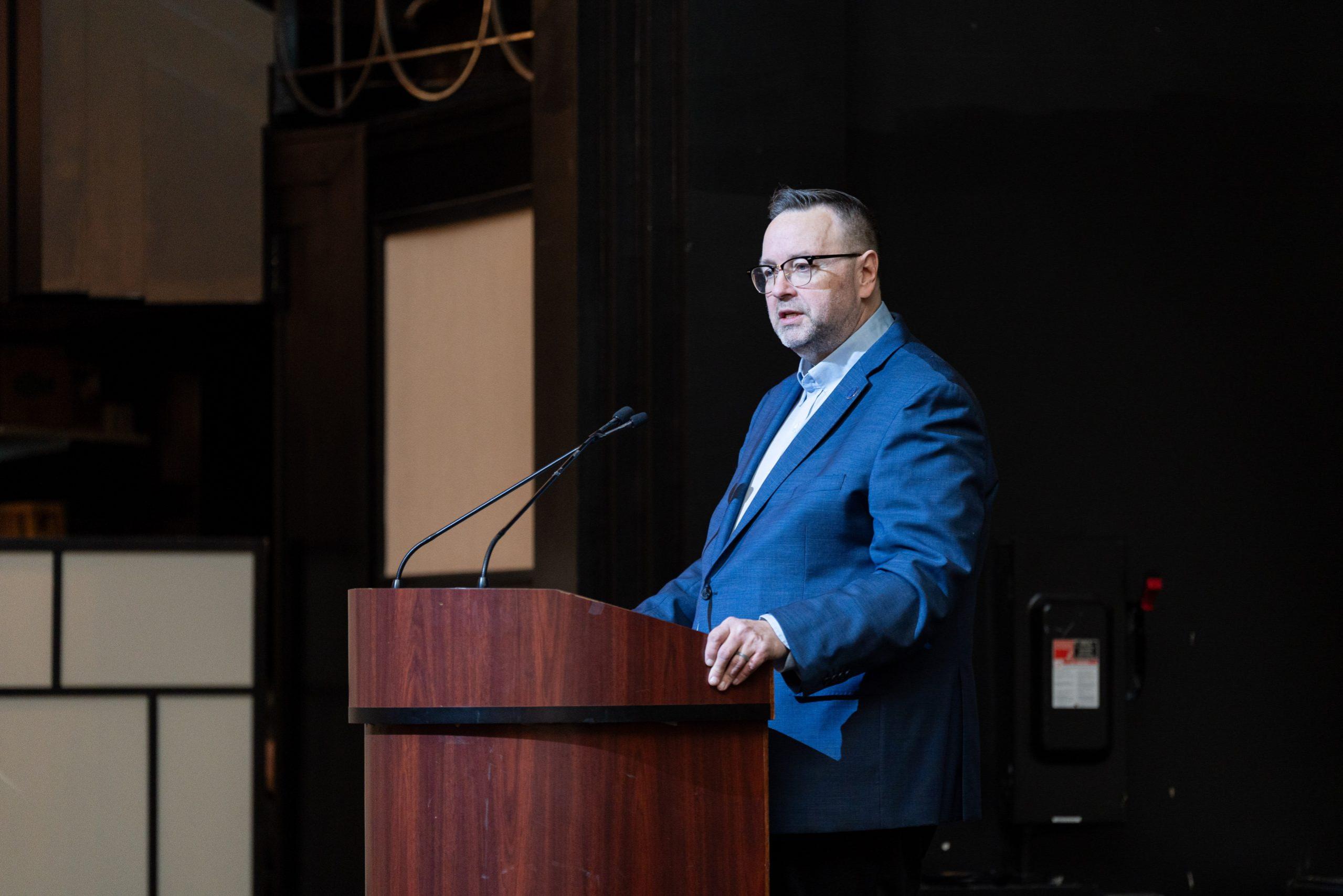
Looking five to ten years out, what will set competitive companies apart? The answer’s pretty direct: “It sounds simple, but it’s resilience,” Sean says. The pandemic and everything turbulent since made it clear that “resilient organizations have a much better chance at not just surviving challenging times, but growing through them.” The advice for leaders today is to build both structure and culture with individual and corporate resilience at the centre.
A Closing Principle
After 40 years advising organizations through every kind of market condition, one idea stands above the rest: excellence is never automatic. “Excellence doesn’t happen because you want it to, or because it’s in the mission statement. It’s intentional and it takes work every single day,” Sean shares. The hardest part is at the beginning, before it becomes a habit, but it pays off. “And it continues to go on,” shares Sean. “The secret is that it’s a journey, not a destination.”
![[SIGNALS] Interview with Bettina Rubek Slater](https://insart.com/wp-content/uploads/2026/06/signals-interview-with-bettina-rubek-slater-300x169.png "The Fortnight That Could Save Your Startup: Interview with Bettina Slater")