
How to turn the market fear into a repeatable wealth strategy and build a tool to help others do the same.
For most investors, a market crash triggers one instinct: get out. Watching portfolios shrink, headlines spiral, and financial pundits disagree on everything except the word “uncertainty” is enough to make even seasoned investors second-guess themselves. Sean Tepper, entrepreneur and founder of Tykr, has spent years arguing the opposite case. In his view, a downturn isn’t a threat to be weathered, but a window most people leave closed. In a recent conversation, he unpacked the strategy behind that conviction, the real numbers that back it up, and the tool he built to help everyday investors act on it with confidence.
A Book, a Belief, and the Birth of a Strategy
Most people, when they watch their portfolio drop, do one of two things: freeze or flee. Sean Tepper does neither. For him, a market crash is less a warning sign and more an invitation, a rare window to buy exceptional businesses at a discount.
Sean traces his investing mindset back to a single turning point: reading Rule #1 by Phil Town. The book introduced him to what Town calls “stockpiling“, the counterintuitive practice of buying more shares when prices fall, rather than retreating to the sidelines.
To explain it, Sean reaches for two investing voices most people already trust. Warren Buffett has famously said, “Be fearful when the market is greedy, and greedy when the market is fearful”, a principle that points directly at downturns as buying moments. Town sharpens it further: “When the market goes up, we make money but when the market goes down, we get rich!” What this means is that we should never sit on the sidelines when the market is down.
For most non-investors, that kind of thinking may feel dangerous, as markets in freefall are terrifying precisely because the future is uncertain. But Sean argues that uncertainty is exactly the point. When geopolitical events, economic shocks, or global crises pull all stocks down indiscriminately (the strong and the weak alike) that’s when the gap between a panicked seller and a patient buyer becomes widest.
The best way to handle emotions, Sean believes, is to look at history.
“When the market goes down, it doesn’t go down for long,” he says. “Over the last 100 years, there have been about 17 bear markets or recessions, with an average duration of just 10 months. That’s a great reminder that we should not sit on the sidelines with fear. We should take action, because the window is short.”
Three Crises. Three Examples.
The S&P 500 has returned about 10% per year over the last decade. That’s a perfectly respectable number — and, to Sean, a baseline that stockpiling can dramatically exceed. He points to three moments in recent history where he put the strategy to work, each triggered by a different kind of shock.
In 2018, the market fell on the back of the first round of “Trump terrif war 1”. Sean made over 80%. In 2020, COVID-19 sent markets into freefall — he made over 120%. In 2022, the Russia-Ukraine conflict coincided with rising inflation and another broad selloff. He made over 60%. (Past returns are not a guarantee of future results.) The cause was different each time. The outcome wasn’t.
Knowing when to buy is one thing. Knowing what to buy is another. A stock that’s down because the whole market is rattled is a completely different animal from one that’s down because the underlying business is broken — and telling the two apart is what Tykr was built to do.
“Geopolitical events can pull all stocks down,” he explains. “That’s when I use Tykr to identify the strongest because when the market takes off again, the strongest stocks take off like a rocket!”
The Tykr: A Traffic Light for the Stock Market
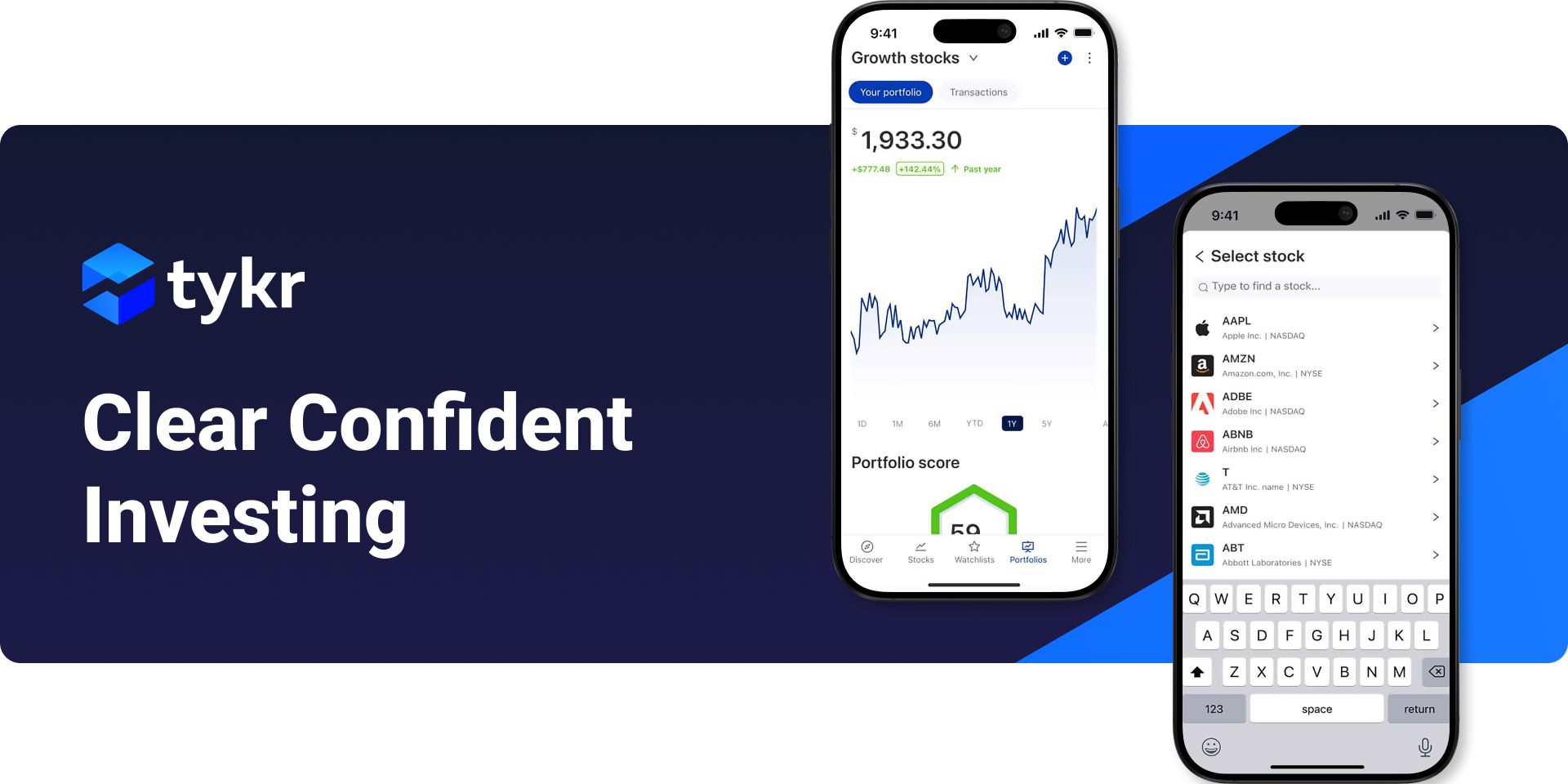
When Sean started investing, he used platforms like The Motley Fool and Seeking Alpha. Both offered analysis, but neither gave him what he actually needed, which was a confident decision.
“One of the best decision making tool ever invented in the traffic light. That’s why it’s used universally around the world to help people drive safely,“ says Sean. “The traffic light can easily applied to other industries and I was shocked that it was not applied to finance. Making an investing tool inspired by the traffic light was simply common sense.“ So he built it himself.
Tykr looks at the three key financial statements including the Income Statement, Cash Flow Statement, and Balance Sheet and rolls up the key metrics to a traffic light rating system. Stocks in Tykr are either On Sale (Green), Watch (Gray), or Overpriced (Red). Only 15% of stocks in the market achieve an On Sale rating.
“If you want to find the strongest stocks in the market, look for On Sale stocks,” Sean advises.
The “Cheat Code” Most Investors Don’t Know Exists
Beyond the traffic light, Sean layers in additional signals designed to give investors the confidence to act. One is the 4M Confidence Booster, an AI-powered tool that evaluates stocks across four dimensions: Math (financial health) M, Meaning (business model), Moat (competitive advantage), and Management (leadership quality). Stocks that score above 80 out of 100 across all four tend to represent genuinely durable businesses.
Then there’s The 7 — Tykr’s most rigorous filter, which synthesizes all of the platform’s ratings into a single composite score. Of the 50,000-plus stocks in the system, roughly 1,000 score a 5 out of 7. About 300 reach a 6. Only around 30 ever achieve a perfect 7.
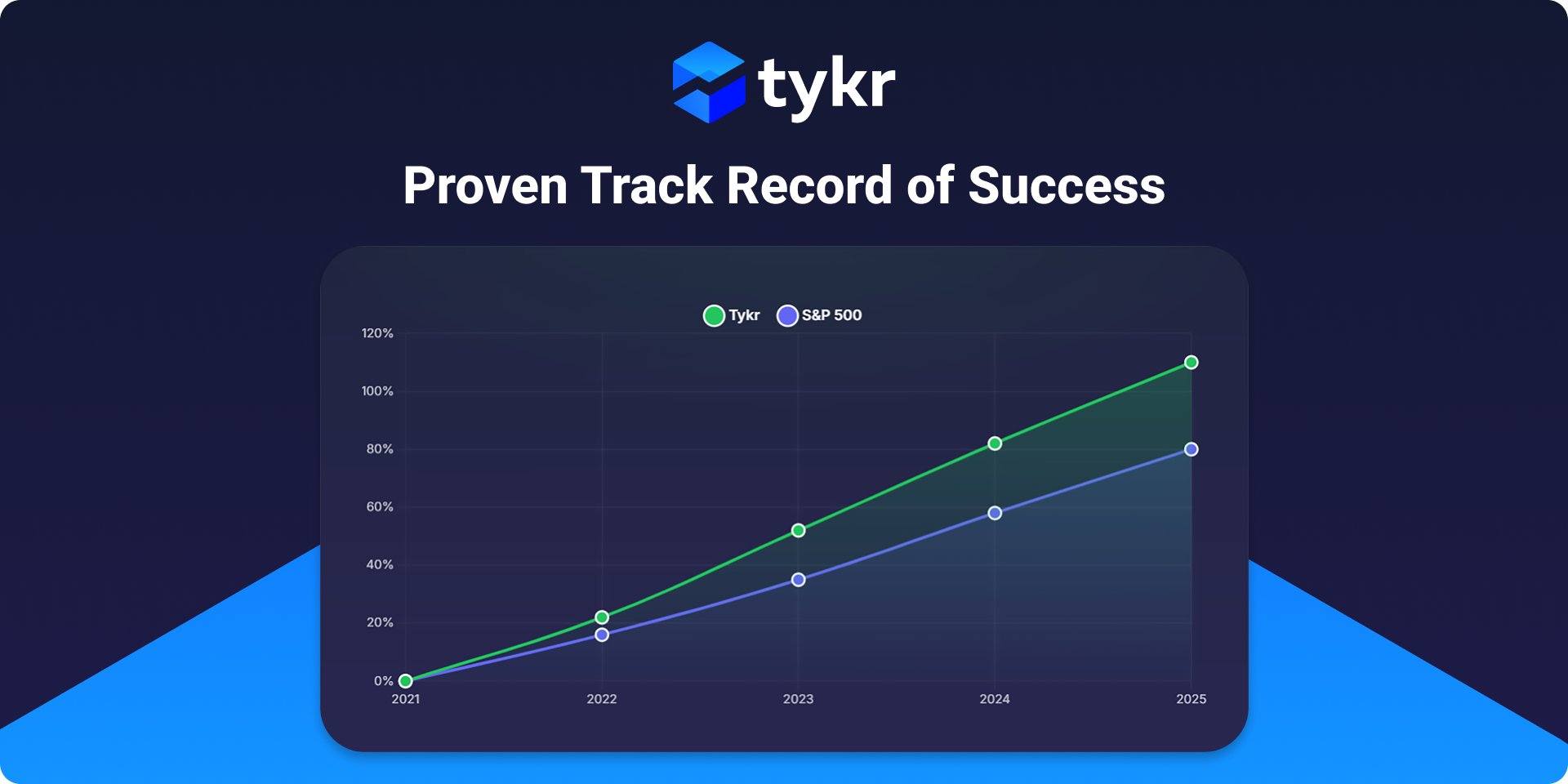
“By using The 7, you’re essentially using a cheat code to do very well in the stock market,” Sean says. The framing is deliberate as he wants investing to feel accessible, not intimidating. And the data backs up the confidence. Over the last five years, while the S&P 500 returned roughly 12% annually and Warren Buffett’s Berkshire Hathaway returned about 14%, the Tykr community averaged approximately 18% per year. The striking detail? More than 80% of Tykr’s customers are complete beginners.
“When someone tells me ‘you can’t beat the professionals,’ I simply show them the analytics of the Tykr community,” Sean says. “The numbers speak for themselves.”
The Human Problem No Algorithm Can Fully Solve
For all of Tykr’s technical sophistication, Sean is candid about the deeper challenge in investing: human behavior, as what bear markets truly test is psychology.
“Adults are essentially grown-up children,” he says. “They have the same emotions, just with more responsibility. I see human beings repeating the same behaviors over and over. They forget history and react with the wrong emotions.”
It’s a pattern he witnesses constantly. “I will literally explain the last 100 years and the 17 bear market fact which calms people down but a week later, those same people start freaking out again,” says Sean. The antidote, he believes, is keeping the historical perspective front and center. Markets have always recovered. Volatility has always been temporary. The investors who internalize that fact (really internalize it, not just intellectually acknowledge it) are the ones who take action when others freeze.
That psychological edge applies equally to entrepreneurs navigating a rough business climate. “If sales are slow, use the opportunity to expand your product or service offering, improve sales and marketing strategies, and figure out ways to cut costs,” Sean shares. “Bad times in the market can be good times to prepare for future growth. For entrepreneurs, I would suggest reading books and listening to podcasts on how to improve sales and marketing as well as how to control emotions.”
Looking Forward
Tykr’s mission, at its core, is to democratize the financial tools that have historically been available only to professional fund managers, the kind that allow investors to identify strong companies and act decisively in downturns. Sean built Tykr to close that gap. The philosophy lies at the core of the stockpiling strategy: the best time to buy is when the market is crashing, and the best way to know what to buy is to cut through the noise. “Tykr cuts through the clutter to find the best stocks in the market,” he says, “while providing the education and confidence needed to navigate downturns.”
For investors who have only ever experienced a bull market, or who have watched their portfolios suffer through corrections without knowing how to respond, that combination (confidence, education, and a proven framework) may be the most valuable offering in the market today.
The next crash is coming. Sean’s message: be ready, not afraid.
Sean Tepper is the founder of Tykr, a stock analysis platform that uses a traffic-light rating system and AI-powered tools to help everyday investors identify strong stocks and invest with confidence. If you want to buy and sell stocks with confidence, join Tykr for free. Visit tykr.com.