

FutureBricks started as a London-based FinTech idea with a very specific ambition: create a lending platform where individuals can invest in property development projects, locally and beyond, and earn monthly interest. In other words, a marketplace that connects capital with asset-backed development, with all the trust, identity checks, and operational reliability that come with touching money. It was a startup stage problem in the purest sense: the direction was clear, the window to launch mattered, and the product needed to reach market with enough core functionality to prove itself without being weighed down by unnecessary complexity.
When INSART stepped in, the mission was not “write code.” The mission was to turn a concept into an executable product plan, then into a working platform, while keeping scope tight and the build predictable. The client needed three outcomes: business analysis to identify the required software functionality, a remote team that can deliver effectively, and development of the platform from scratch with enough initial functionality to launch. Those are the kind of requirements that look simple on a slide, but they are exactly where most early-stage products either overspend, underdeliver, or drift into endless iterations.
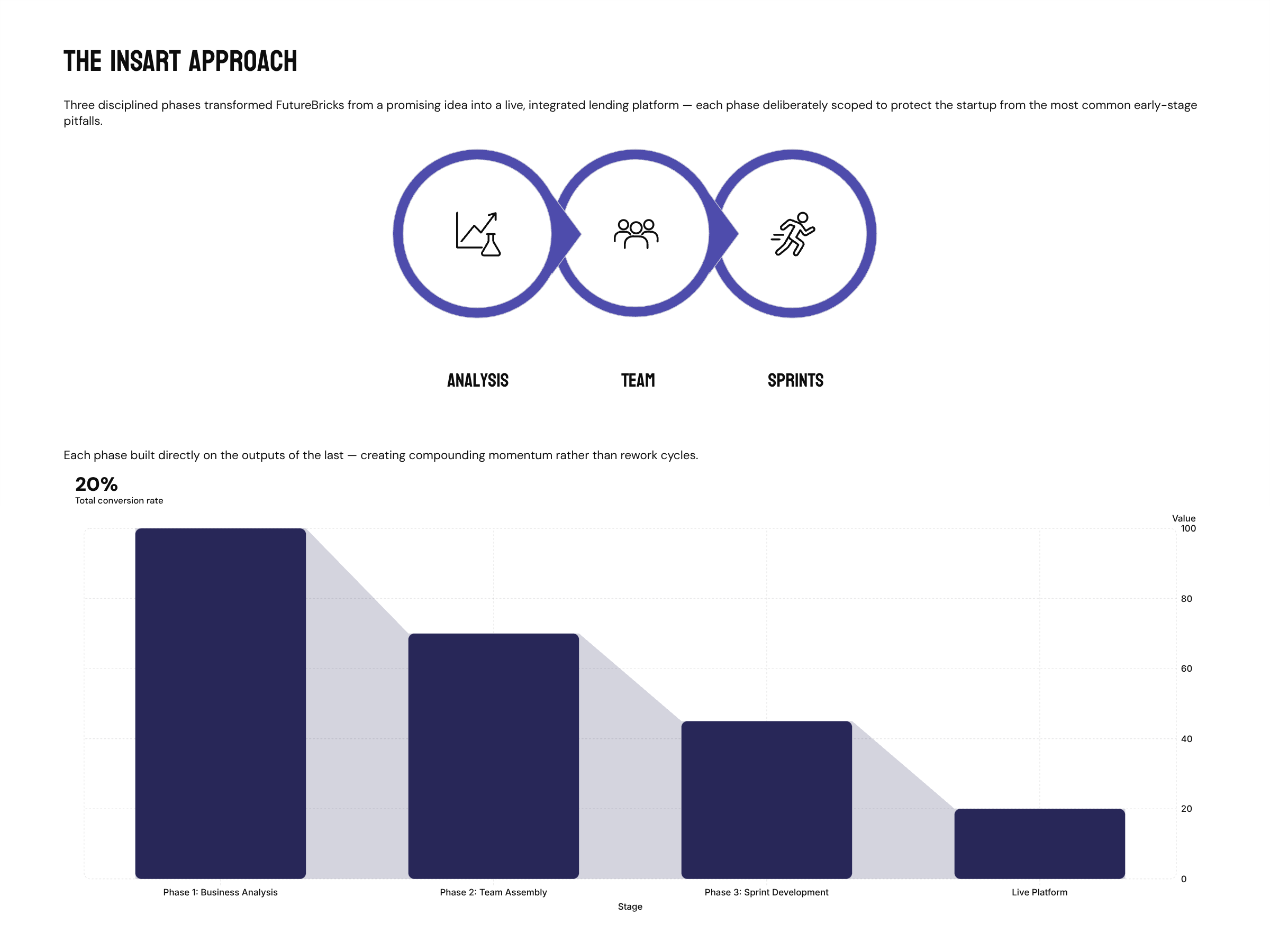
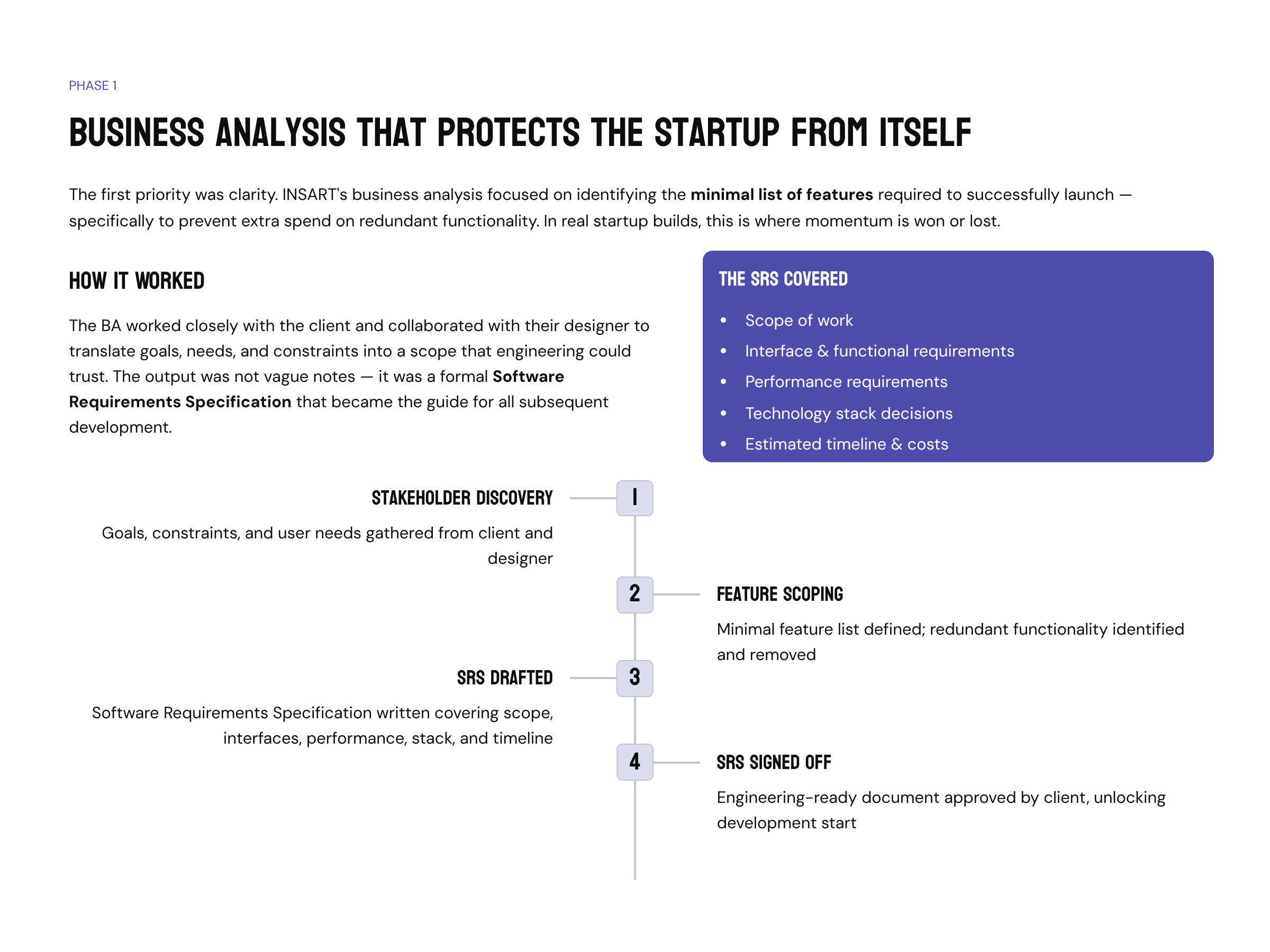
Step 1: Business analysis that protects the startup from itself
The first thing we did was create clarity. INSART provided business analysis that focused on identifying the minimal list of features required to successfully launch the platform, specifically to prevent extra spend on redundant functionality. This sounds obvious, but in real startup builds, this is where momentum is won or lost. The BA worked closely with the client and collaborated with the client’s designer to translate goals, needs, and constraints into a real scope that engineering could trust. The output was not vague notes. It was a Software Requirements Specification that described scope of work, interface and functional requirements, performance requirements, technology stack, and estimated timeline and costs, then became the guide for subsequent development.
Step 2: Build the delivery unit, not a random group of developers
Startups often think hiring is the hard part, but alignment and delivery discipline are the hard parts. INSART formed a solution development team with explicit requirements: enough expertise to design and develop system architecture from scratch, the right stack experience, and the ability to execute to quality and on time. The resulting team was intentionally compact and execution-focused: a project manager mixed with BA role, a Java backend developer, a frontend developer, and a QA engineer. That structure is deliberate. It keeps feedback loops short, decisions fast, and accountability clear, which is exactly what early-stage fintech products need.
Step 3: Ship the platform in sprints, with real integrations and real workflows
With scope locked and the team in place, we developed the platform itself. The product intent was practical: it needed to contain information about house builders with limited access to finance, and enable investors to participate in asset-backed property development projects with monthly interest. The platform was designed around core modules that make it usable in real life, including an investor dashboard and an administration dashboard, rather than only “happy path” flows.
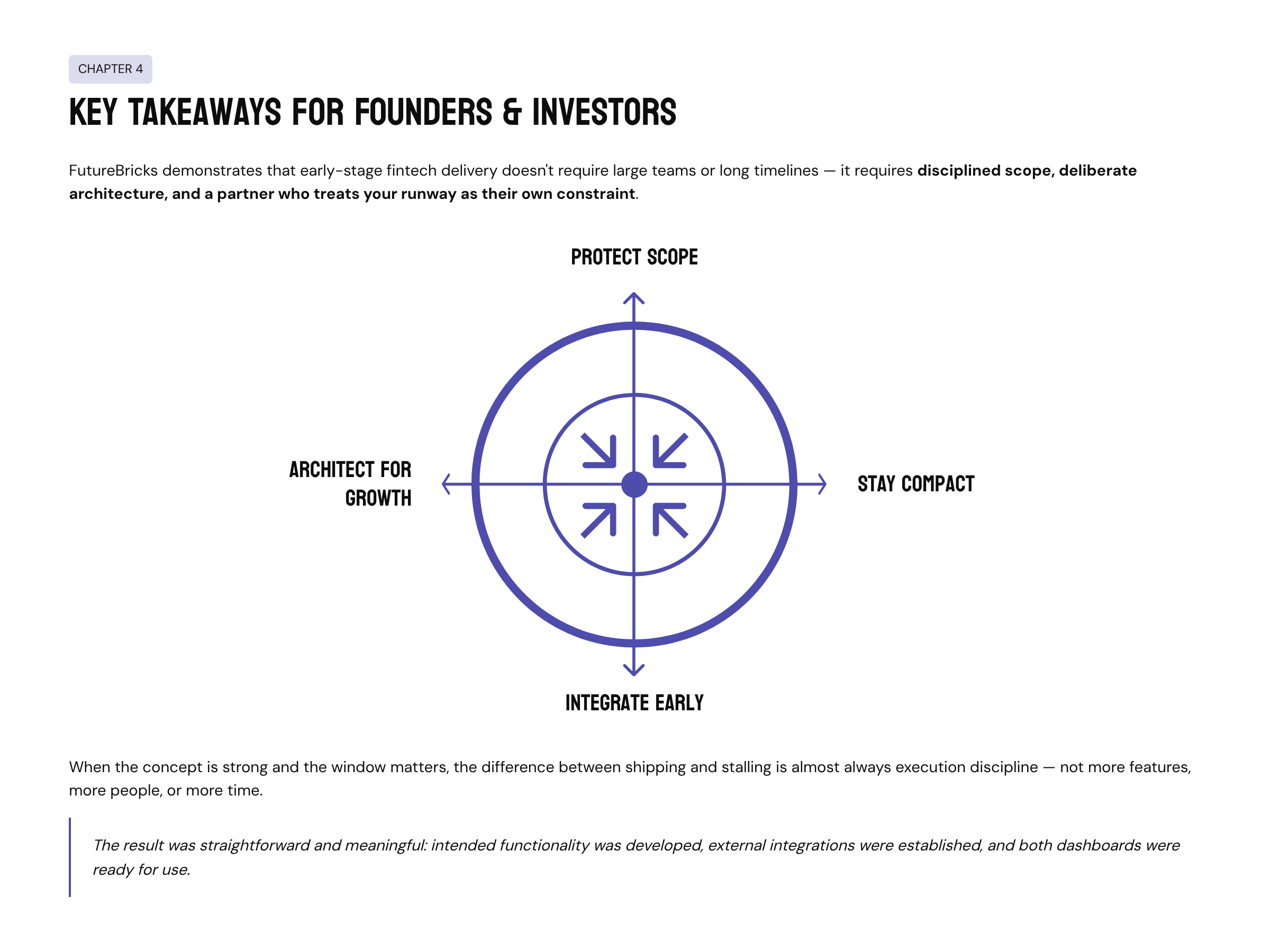
Because this is fintech, integrations were not optional extras. The platform required third-party integration through an Identity check API and an E-wallet API, which forced the product to meet a higher bar of operational realism from the start. We ran delivery on Scrum, using two-week sprints with daily meetings and demos at the end of each sprint. Tasks for each iteration were defined by the client, while INSART drove the execution cadence, the engineering quality, and the integration delivery. The result was straightforward and meaningful: intended functionality was developed, external integrations were established, and both dashboards were ready for use.
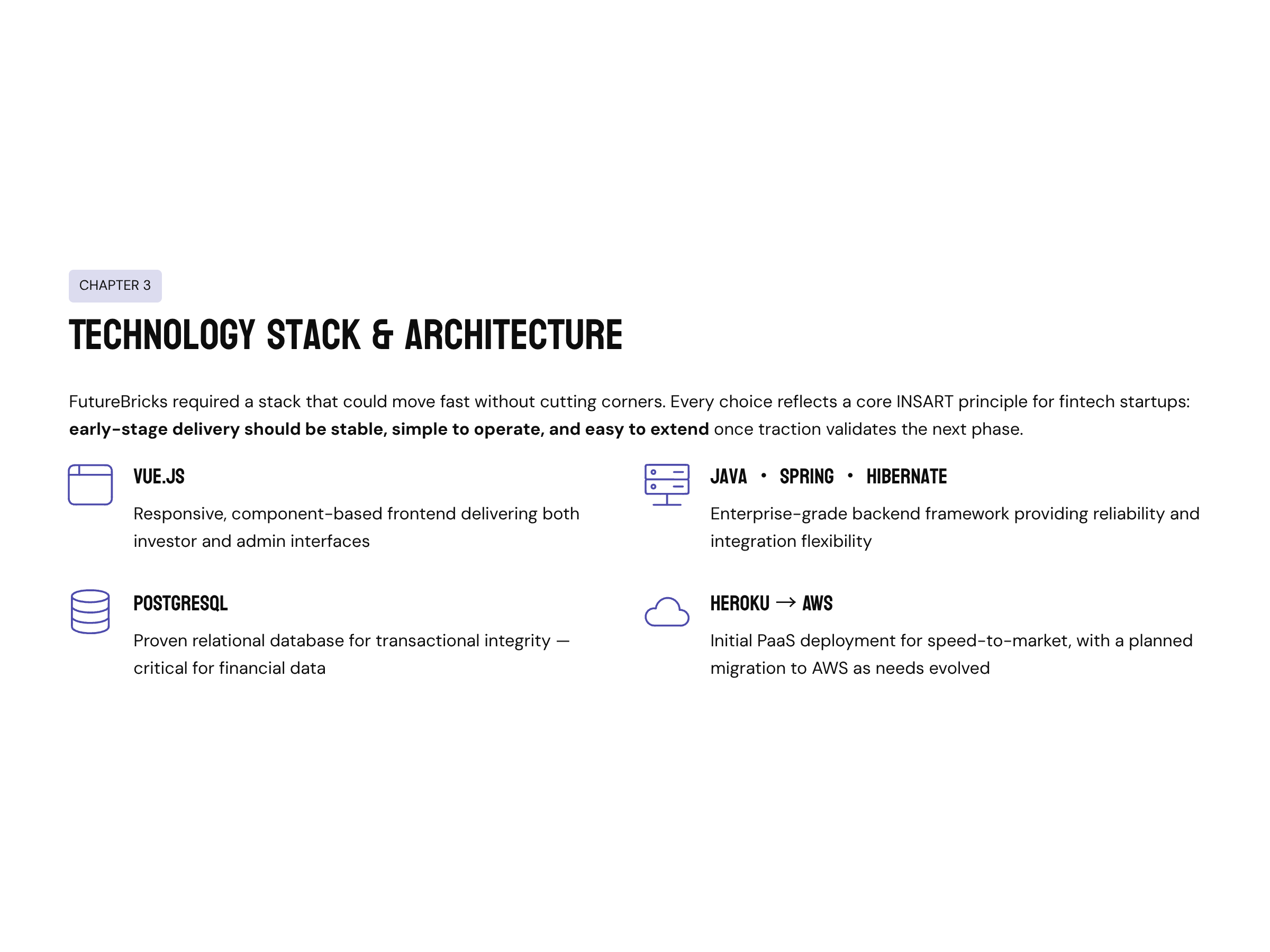
The tools and stack choices that kept execution predictable
FutureBricks required a stack that could move fast without cutting corners. The platform used Vue.js for building the UI, Java with Spring and Hibernate on the backend, PostgreSQL as the database, and Heroku PaaS as the initial cloud platform based on the client’s choice, with a later move toward AWS as needs evolved. These choices reflect a common INSART principle for fintech startups: early-stage delivery should be stable, simple to operate, and easy to extend once traction validates the next phase.
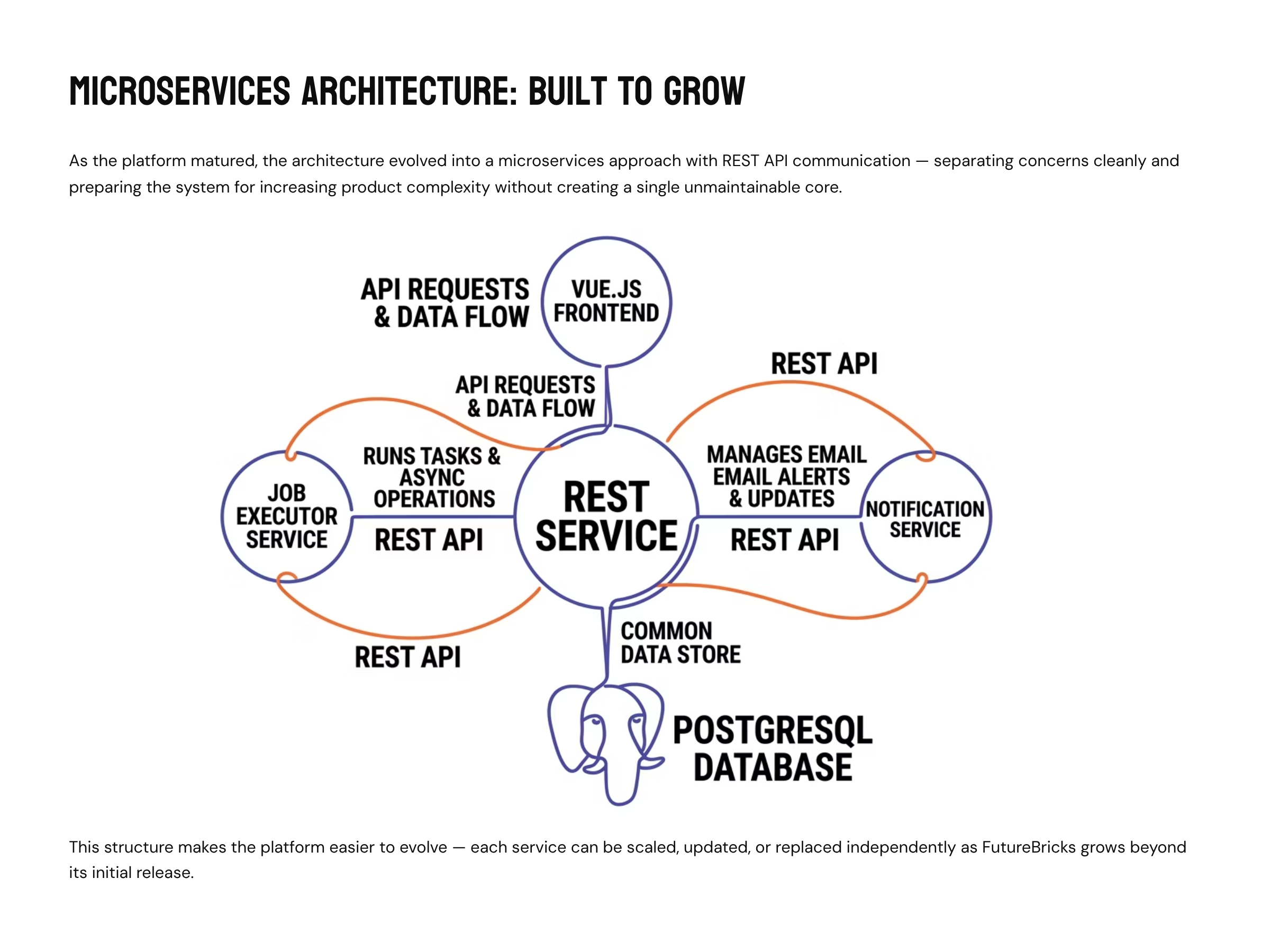
Architecture: built to grow beyond the first release
As the platform matured, the architecture was represented as a microservices approach with REST API communication, structured into three services: a REST service responsible for requests, a Notification service responsible for notifications, and a Job executor service responsible for background jobs. This is the kind of structure that makes a startup platform easier to evolve because it separates concerns cleanly and prepares the system for increasing product complexity without creating a single unmaintainable core.