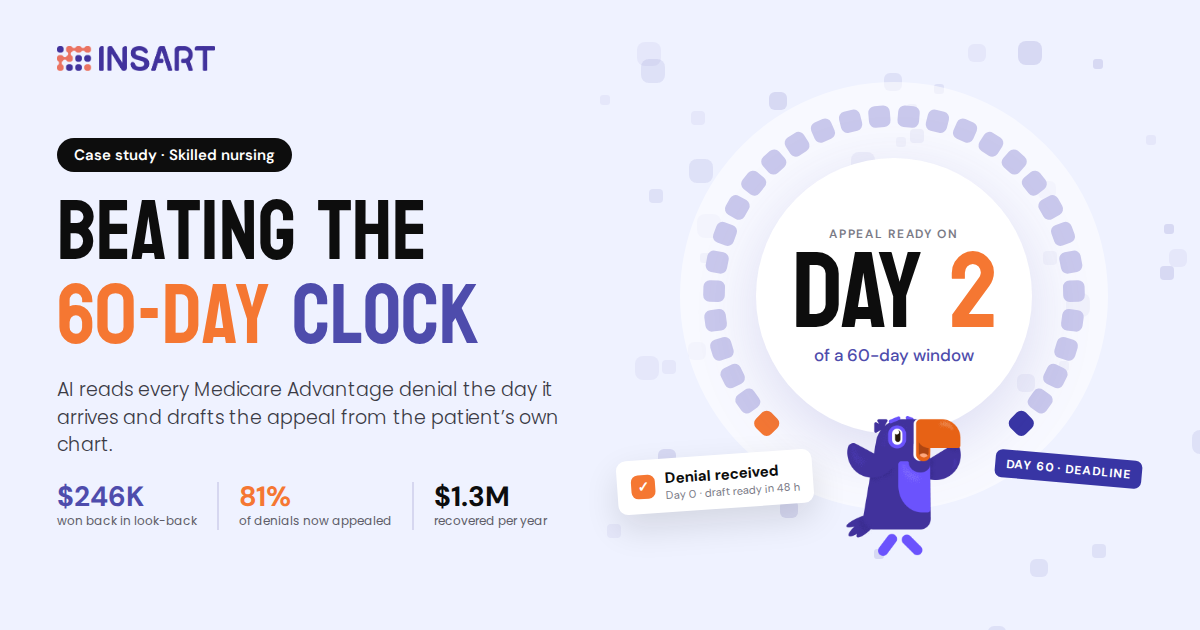

$1.4M in denied claims reviewed · $246K recovered from the look-back · appeal rate up from 18% to 81% · $1.3M a year now recovered on a rolling basis
The company
A regional skilled nursing operator runs six facilities with about 720 beds across two states. More of its patients come through Medicare Advantage every year. Those are private insurance plans that replace traditional Medicare and decide, case by case, whether a stay or a claim gets paid.
The business office has a director, two billers per facility, and an admissions team that works directly with hospital discharge planners.
The quiet denials
Medicare Advantage plans deny in two places. Some patients are denied before they arrive: the hospital refers them, and the plan says the stay isn’t medically necessary. Others are denied after the stay: the claim comes back rejected or cut, often with a one-line reason code.
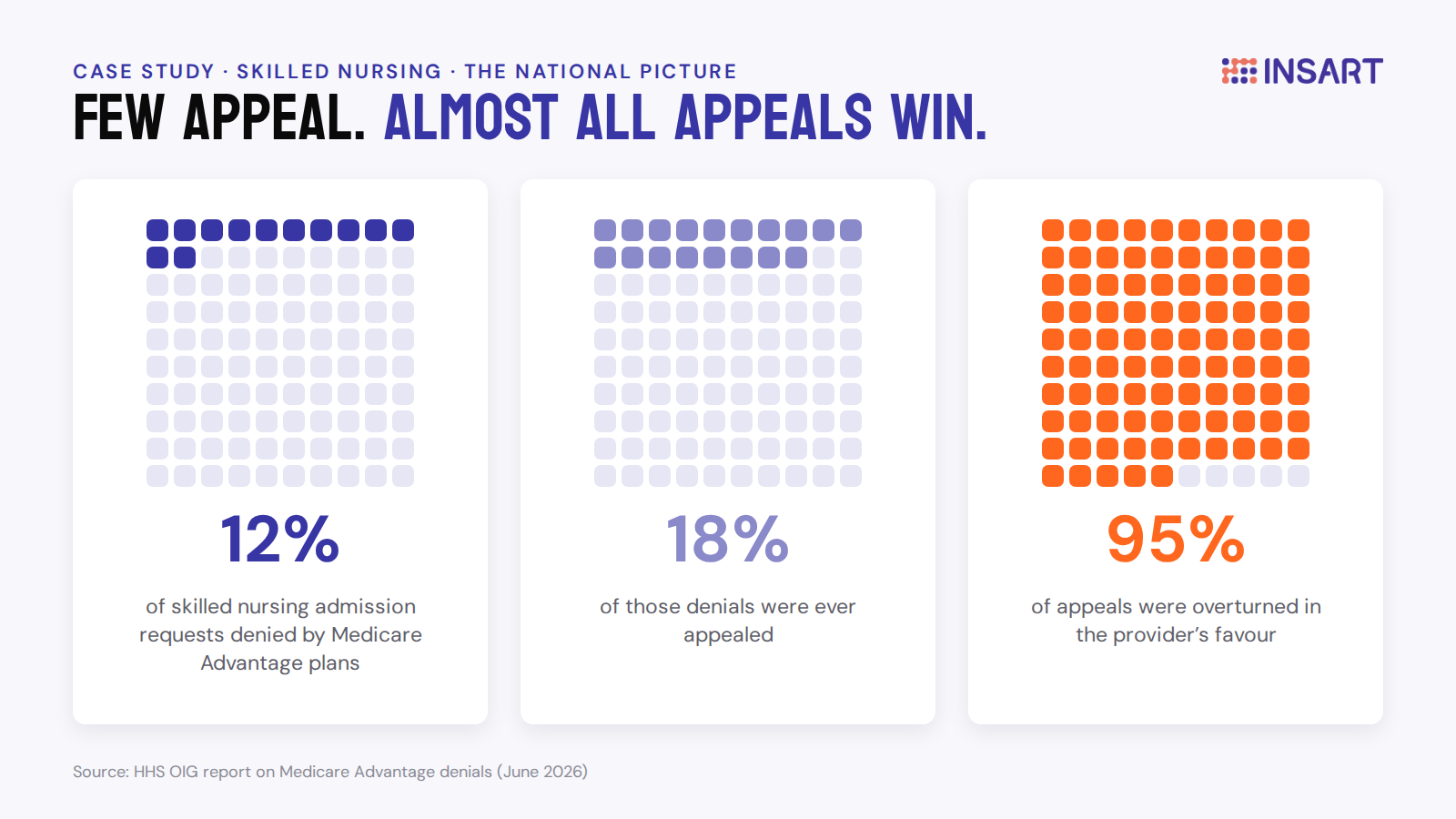
Nationally, the numbers are stark. A June 2026 report from the HHS Office of Inspector General found that Medicare Advantage plans denied 12% of skilled nursing admission requests. Only 18% of those denials were ever appealed. And 95% of the appeals that were filed won.
In other words, most denials are reversible, and almost nobody fights them.
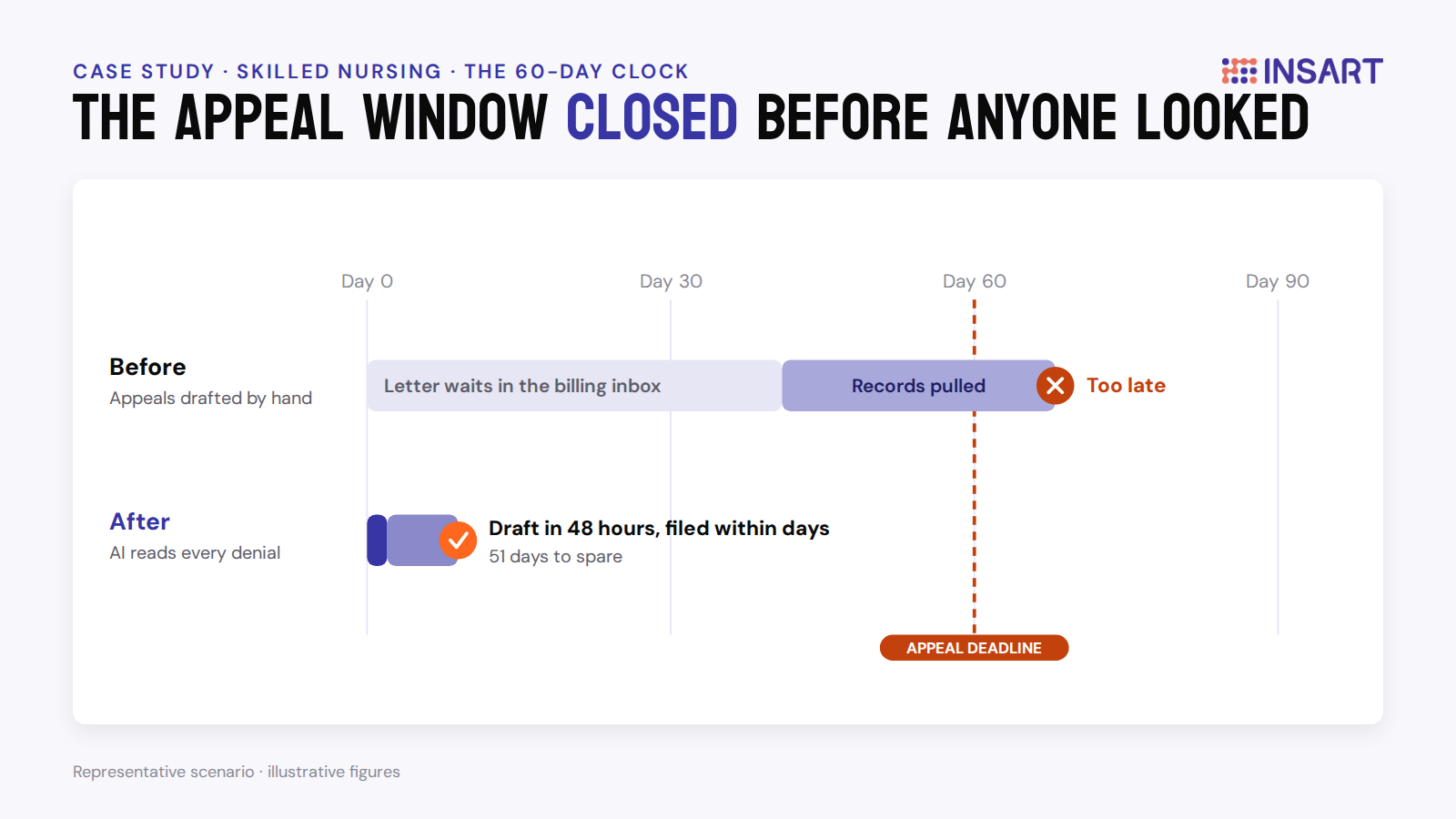
The operator matched that pattern exactly. Appeals happened when a biller had time, which was rarely. Each one meant pulling hospital discharge notes, therapy evaluations and assessment scores from three systems, then writing a letter that tied them to the plan’s own coverage rules. That takes two or three hours per appeal. With 60-day appeal windows on most plan contracts, the deadline usually passed first.
Looking back at a year of denials
We started with 12 months of remittance data from every Medicare Advantage plan the operator billed, plus the denial letters and plan contracts. The work ran in a secured, HIPAA-compliant environment under a business associate agreement, as any healthcare data project has to.
The AI sorted every denial by plan, reason code and date, then checked three things:
- Is it still inside the appeal window?
- Does the medical record contradict the denial reason?
- Is the denial even consistent with the plan’s contract and coverage rules?
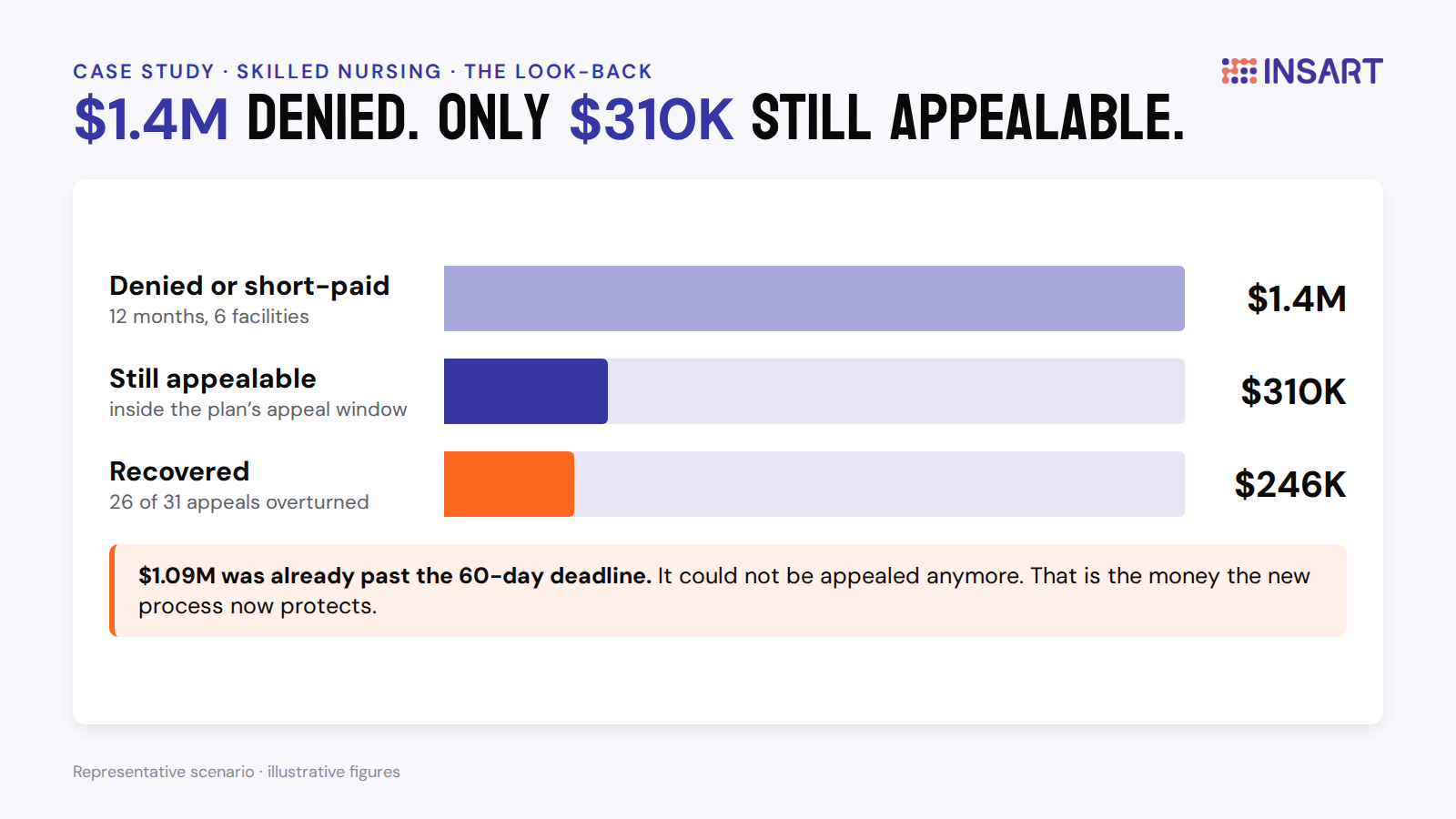
Of $1.4M in denied and short-paid claims, most was already past its appeal deadline. Lost for good, and the real lesson of the look-back. But $310K was still inside the window.
One patient’s file
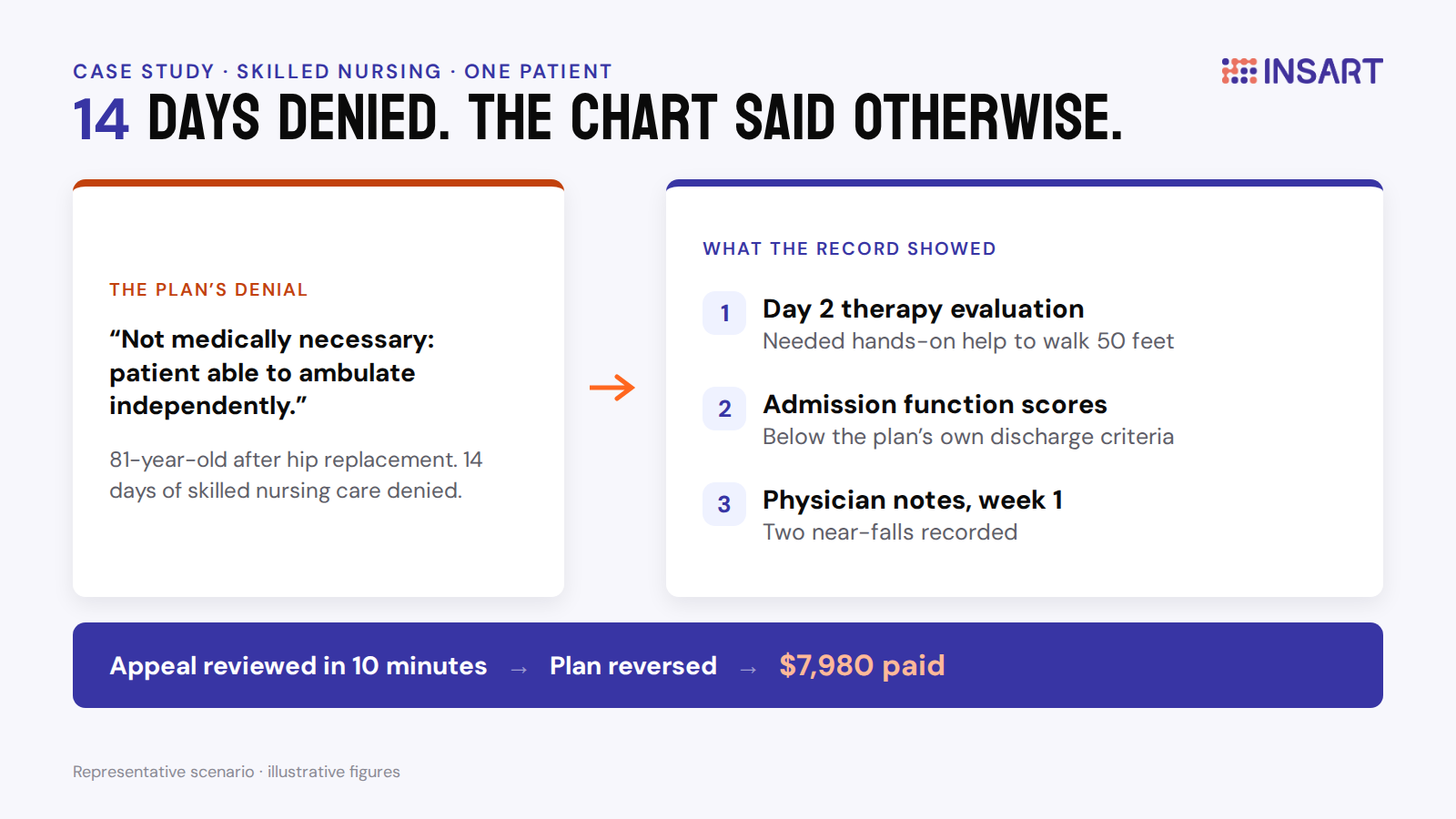
One case shows how most of them went. An 81-year-old patient was discharged from the hospital after a hip replacement. She was admitted for rehabilitation, and the plan later denied 14 days of the stay as “not medically necessary: patient able to ambulate independently.”
The record said otherwise:
- Her therapy evaluation on day 2 showed she needed hands-on help to walk 50 feet.
- Her functional scores on the admission assessment were well below the level the plan’s own criteria used for discharge.
- The physician’s notes recorded two near-falls in the first week.
The AI pulled all three into an appeal letter that quoted the plan’s criteria next to each fact. The biller reviewed it in ten minutes and sent it. The plan reversed the denial and paid $7,980.
What the look-back returned
The operator filed 31 appeals from the look-back, worth $310K. Within 90 days, 26 were overturned, and $246K was paid.
The bigger finding was the pattern behind them:
- Two plans accounted for 64% of all denials.
- One plan’s denials clustered on day 14 of the stay, almost regardless of the patient’s condition.
That pattern gave the operator’s leadership something they’d never had before: evidence to take into contract renegotiation with that plan.
Running every day
The look-back proved the money was there. The lasting change was beating the clock on new denials:
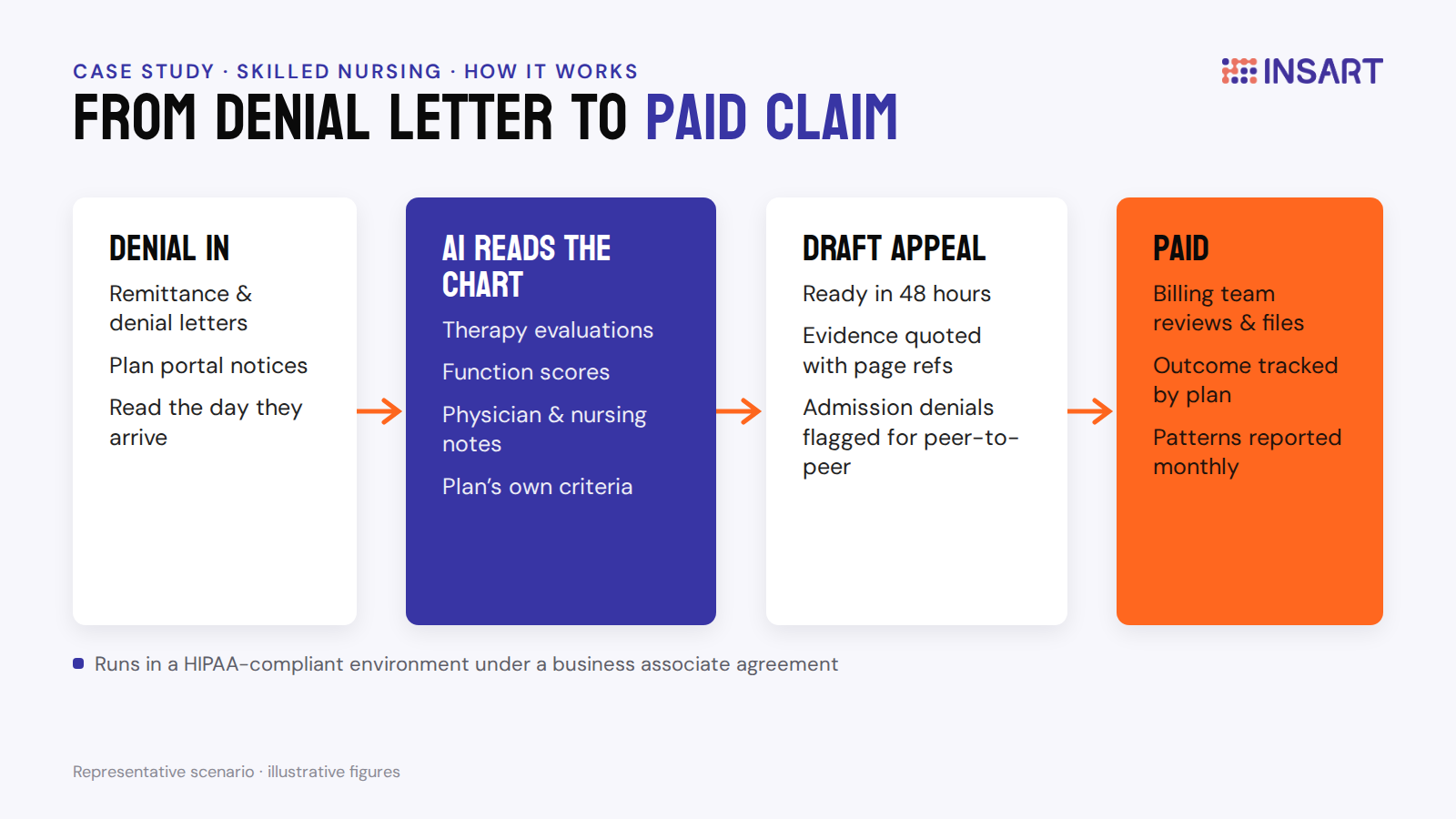
- Every new denial is read the day it arrives and checked against the medical record.
- Appealable cases get a draft letter with the evidence attached within 48 hours, so billers review instead of write.
- Admission denials from hospital referrals are flagged in real time, so the admissions team can push for a peer-to-peer review with the plan’s doctor while the patient is still in the hospital.
Twelve months later
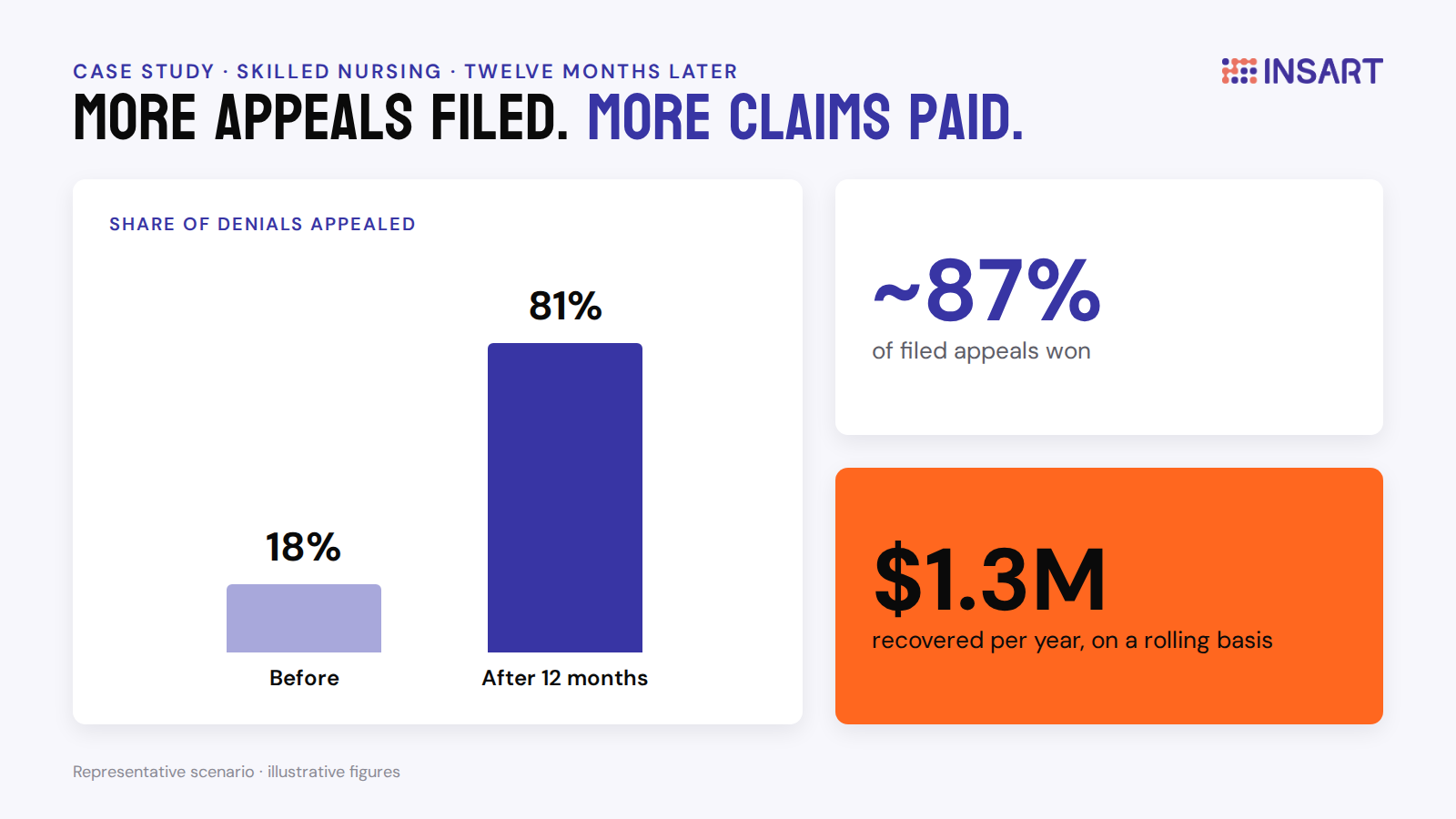
The appeal rate went from 18% to 81% of denials. About 87% of appeals were won. Recovered revenue now runs at about $1.3M a year across the six facilities.
The billers handle the same volume as before. The difference is that they spend their time reviewing finished appeals instead of digging through charts to build them.