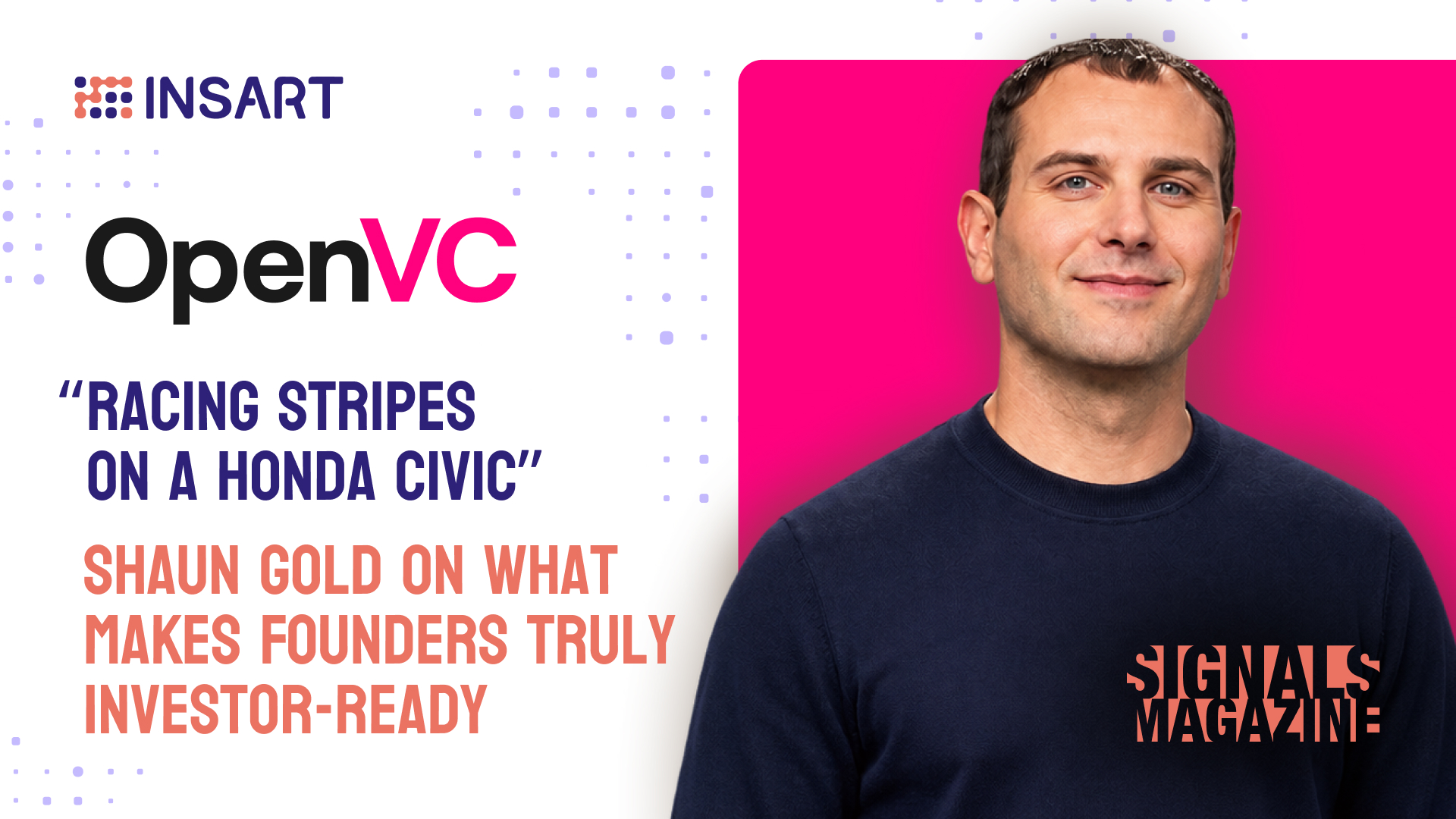

What makes an AI startup investable, versus just another company with “AI” bolted onto the pitch deck? We sat down with Shaun Gold, Chief Evangelist at OpenVC and the mind behind Venture Comedy, to dig into exactly that. From the telltale signs a founder is truly raise-ready to the biggest mistakes that kill investor confidence, Shaun brings a rare mix of sharp analysis and dry humor to a topic most founders find anything but funny — fundraising.
Shaun Gold is the Chief Evangelist at OpenVC and the creator of Venture Comedy, where startups and stand-up collide. He writes about venture capital, entrepreneurship, technology, and innovation on LinkedIn and X, helping founders and investors navigate the startup world with equal parts insight and humor.
AI Hype vs. Real Investability
Adding “AI” to a pitch deck isn’t the advantage founders think it is. We started by asking Shaun what actually separates a genuinely investable AI company from one riding the trend.
Many founders believe AI automatically makes a company more attractive to investors. What makes an AI startup investable versus simply AI-enabled?
A lot of founders think adding AI to their pitch is like putting racing stripes on a Honda Civic. It may look cool but at the end of the day, it’s still a Honda Civic.
Everyone uses AI today. It’s not really something that is a competitive advantage unless it makes your company fundamentally better.
For example, did AI create a product that couldn’t exist before?
Does it make you dramatically faster, cheaper, or better?
Does your advantage compound as you collect more customers and more data?
Investors aren’t funding ChatGPT wrappers anymore. They’re looking for businesses where AI creates an unfair advantage.
Founders need to ask themselves this before doing investor outreach.
The Signals of a Raise-Ready Founder
Beyond the product itself, investors are reading the founder. Shaun breaks down the concrete signals and the biggest misconception around being truly ready to raise.
What are the three strongest signals that tell you a startup is ready to raise a round?
First, they know exactly why they’re raising. “More runway” isn’t a strategy or a real reason.
Second, they have evidence that customers actually want what they’re building. Revenue is great. Growth is there. Paid pilots, growing usage, retention, anything real beats a beautiful pitch deck. Did I mention revenue?
Third, they can answer hard questions without sounding like they’re reading from a script. Investors can tell pretty quickly who’s lived the business and who’s rehearsed it.
What’s the biggest misconception founders have about being investor-ready?
That it’s about having the perfect deck with a killer story and bold vision. Founders will spend months working on the vision and the brand while completely ignoring the fact that nobody wants to buy their product.
The deck opens the conversation. The lack of business closes it. Always.
How OpenVC Matches Founders and Investors
We also wanted to understand the mechanics behind OpenVC itself — how it approaches matchmaking differently from the “spray and pray” model most founders default to.
How does OpenVC approach matching founders and investors, and what sets your model apart from traditional fundraising platforms?
We approach matching as a fit and trust problem, not a “spray 500 investors and pray” problem.
We match founders and investors based on stage, sector, geography, check size, thesis, and other practical signals. We also filter outreach so investors receive relevant, high-quality deals, which builds trust and creates a better experience on both sides.
We are not trying to be a broker or middleman. Once there is mutual interest, we get out of the way. We do not meddle in the relationship, and we do not charge equity or success fees.
Founders want access and control. Investors want signal, not spam. That is the model we are building.
Targeting the Right Investors
Knowing who to approach and how to pace the process is just as important as being ready. Shaun explains the difference between chasing logos and chasing fit, and what separates founders who raise quickly from those who drag it out for months.
What’s the biggest mistake founders make when choosing which investors to approach?
They optimize for logos instead of fit. Just because a fund invested in OpenAI doesn’t mean they’re interested in your pre-seed cybersecurity startup in Nebraska.
Everyone wants a tier-1 fund or a celebrity investor. But that’s not the goal. The goal is to pitch investors who actually write checks into companies that look like yours. OpenVC streamlines this process.
For example, we heavily use AI across the workflow, from matching and email optimization to follow-ups and process automation. The goal is to make fundraising more structured, less error-prone, and as close to failproof as possible.
That’s especially valuable for first-time founders, who might otherwise make a lot of classic rookie mistakes without even realizing it.
Have you noticed common differences between founders who raise quickly versus those who struggle for months?
The founders who raise quickly usually create momentum. They know that fundraising has a seasonality to it. They understand that they need to speak to a lot of investors in a relatively short window. They’re prepared, they know their numbers, and they tell a consistent story.
Most importantly, they optimize for intro pathways. They start with their immediate network and go from there. The investors you want most are often the investors that you approach last.
The founders who struggle tend to treat fundraising like speed dating where they go on one date every three weeks. They don’t give it the time and attention that it honestly demands. That’s a painful way to raise capital.
Credibility, Consistency, and Investor Trust
Small inconsistencies can quietly sink a raise. We asked Shaun what founders unintentionally do that erodes investor confidence.
What’s something founders accidentally communicate that damages investor confidence?
Changing the story every meeting. For example, if your TAM (total addressable market) changes by a hundred billion dollars depending on who you’re talking to, investors notice. If you have multiple different decks for different investors, that’s a red flag. If you ask for an NDA, that’s an amateur move. It’s a small world. Investors communicate with one another. You need to be consistent and professional.
This doesn’t mean you need to know every answer, but you do need to know what you believe.
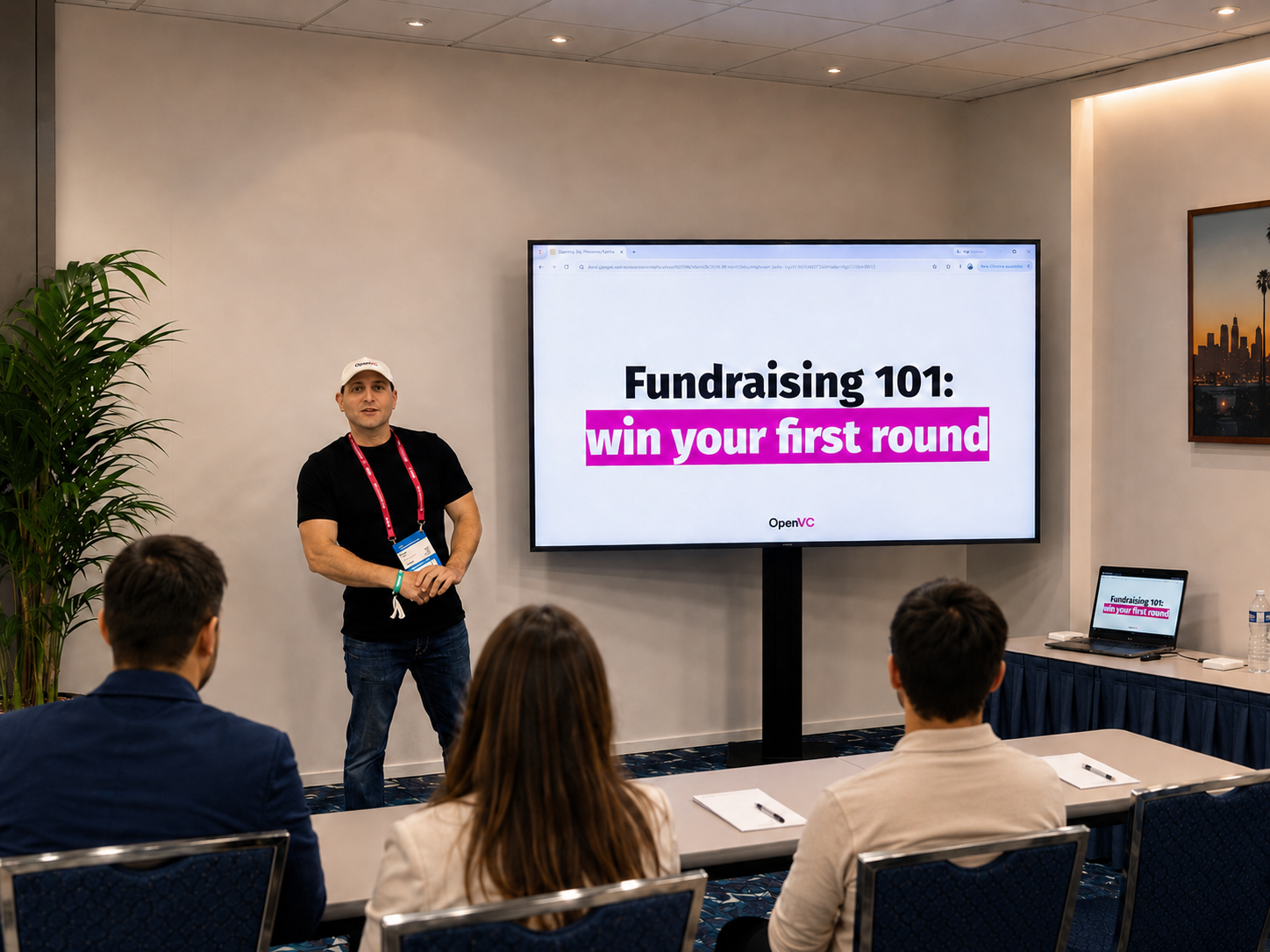
Making Sense of Rejection
No topic trips founders up more than the “no.” Shaun walks through when to actually listen to investor feedback, when to ignore it, and how to reframe rejection so it doesn’t derail momentum.
When should founders take VC feedback seriously, and when should they ignore it? How can founders distinguish between a real weakness and an excuse?
One investor saying something is an opinion. Ten investors saying the same thing is data.
Patterns matter in this industry. Investors often rely on patent recognition when investing in startups. Founders need to do the same when it comes to investors.
At the same time, remember that investors see companies for an hour.
Founders live the business every day.
You may think you have the next great idea but to an investor, you are deck #8 on a Tuesday.
Listen carefully but don’t outsource your conviction.
What’s the best way to ask investors for useful feedback after a rejection?
Investors rarely give feedback after a rejection. We have an entire blog post dedicated to this. The first thing founders get wrong is assuming investor feedback is objective. Most of the time, it isn’t.
Once an investor decides they’re out, the feedback usually becomes polite rather than useful.
It’s the venture capital version of, “Let’s just be friends.”
Think about it from their perspective. They’ve already decided they aren’t investing. Spending twenty minutes unpacking every reason why doesn’t change the outcome. You probably won’t meet again, so there’s very little incentive to write you a personalized post-game report.
That’s why I wouldn’t obsess over every rejection. Listen for patterns, not individual opinions.
What’s the most common reason strong startups still receive a “no”?
It’s hard to narrow it down to just one. But I would say timing.
Sometimes the fund just made a similar investment. Sometimes they’re out of capital. Sometimes they’re changing strategy. Sometimes the partner who loved you couldn’t convince the partnership.
Founders often assume every no is about them. It usually isn’t.
You can’t take it personally. Raising capital is a numbers game. You need to keep moving forward.
And never forget: a “no” today doesn’t mean a “no” in your next round.
What’s the biggest lesson founders misunderstand about hearing “no”?
A “no” isn’t a verdict on their company. It’s one investor making one decision at one moment in time, based on their fund, their thesis, and their appetite for risk. Founders tend to treat every rejection like a universal truth, when in reality it’s often just a lack of alignment.
History is full of companies that looked obvious only after they succeeded. Airbnb was rejected by dozens of investors. Canva spent years hearing no before raising meaningful capital. The goal is to find the handful of investors who see what you’re building before everyone else does. That’s all it takes.
Where Fundraising Is Headed
We closed by asking Shaun to look ahead, and he sees the market splitting into two very different paths.
What’s one prediction about startup fundraising over the next three years?
Fundraising is splitting into two very different games.
On one side, you have what I’d call vibe-raising: hot AI startups, high-signal teams, massive narrative momentum, and $10M+ pre-seeds from tier-1 funds before there is even much of a product.
On the other side, you have grind-raising: everyone else. These founders need to prove traction earlier, raise in smaller steps, fight for every intro, and move painfully from accelerator to angels to micro-VCs to seed funds, one milestone at a time.
I expect this bifurcation to continue for at least the next couple of years.